Just Between Us
- 4.6
- Rating
- 100.00K
- Installs
- Free
- Price

 Analysis by App-foxy
Some conversations are easy to postpone precisely because they matter. A quick message about dinner, a shared calendar, or a practical reminder can happen anywhere, but a thoughtful conversation between partners often needs a quieter, more deliberate space. That is where Just Between Us tries to fit. I found it most useful as a private-feeling place for couples who want to give their relationship more attention without turning every exchange into a serious appointment.
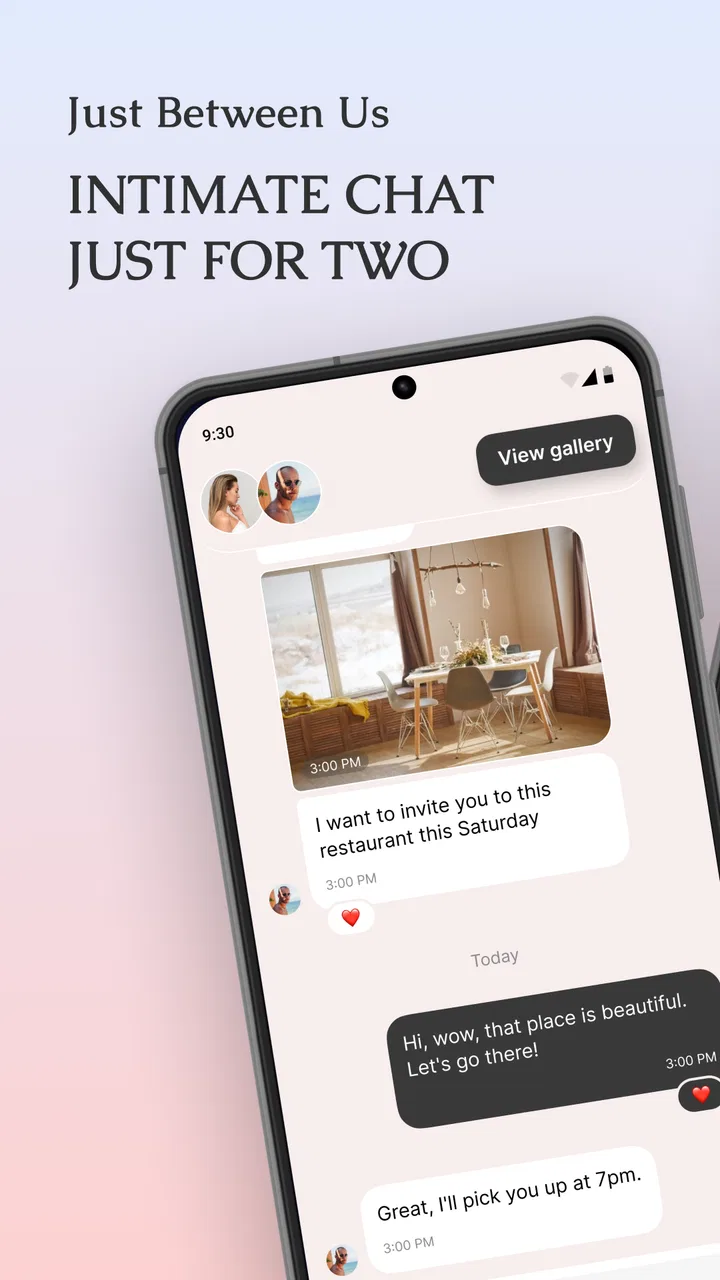
This is a free communication app from Get Your Marriage On!, aimed at couples rather than general group messaging. Its store summary describes it as intimate chat for couples, and that focus is important: it is not trying to replace every messaging tool on your phone. Instead, it gives relationship conversations their own setting. The app has reached over one hundred thousand installs and holds a 4.6 average from around one thousand ratings, which suggests that its narrow purpose connects with a meaningful audience.
My overall impression is positive, with one important condition: both people need to want this kind of intentional communication. If one partner sees relationship prompts or private check-ins as forced, the app can feel like another task. If both partners are willing to make room for honest conversation, it can be a gentle way to start discussions that otherwise keep getting delayed.
You May Also Like

 Blood Strike: 2.5 Anniversary
Blood Strike’s Loadouts Turn Every Drop Into a Tactical Gamble
A close look at Blood Strike’s custom loadouts: how fast access to signature weapons reshapes its battle royale rhythm, rewards preparation, and narrows the gap between fights.

 Pandora - Music & Podcasts
Pandora’s Music Is Easy to Start, but Harder to Recover
Pandora’s strength is its low-effort path from a seed to a station. Its weak spot is how much confidence it asks you to place in connection, setup, and quiet recovery.

 8 Ball Pool
 Is Built on Rivalries, Rematches, and Routine
A close look at the rivalries, rematches, shared routines, and unanswered safety questions that turn a quick pool match into a persistent mobile community.

 Samsung Music
’s Quiet Strength Is Playing What You Already Own
Its reach comes less from spectacle than from dependable access to a personal library. That simplicity is both the app’s strongest retention engine and its ceiling.

 AccuWeather: Weather Radar
AccuWeather Review: A Quick, Clear Forecast for Everyday Decisions
For everyday plans, the best forecast is the one you can understand quickly. AccuWeather makes rain timing, radar, and local conditions easy to act on, with a few trade-offs.

 Hill Climb Racing
Why Hill Climb Racing Still Turns Crashes Into One More Run
A tiny car, a bumpy hill and one more upgrade: Hill Climb Racing keeps resurfacing because its simple chaos makes every near-miss feel personal.
More From Our News Desk



How it fits into real household life
I’d use this section to think about the small routines that make a couples app workable: when each person has a quiet moment, which device feels appropriate, and how to keep a conversation from competing with urgent household messages. A low-pressure check-in can be easier to sustain than a promise to discuss everything. With that everyday context in mind, it helps to consider how the app fits alongside the tools a household already uses.
A shared space for a conversation that should not get lost
The most convincing use case is a busy household where practical messages have taken over. Imagine two partners managing work, children, errands, meals, and the small decisions that keep a home moving. Their usual chat may be full of “Can you pick this up?” or “What time will you be home?” Those messages are useful, but they do not leave much room for asking how the other person is actually doing.
Just Between Us makes sense when a couple wants to separate that emotional space from the noise of ordinary coordination. I would not treat it as a replacement for a normal messenger. A regular messaging service is still better for urgent updates, sending a location, sharing a document, or organizing a larger group. This app is more appealing when the goal is to slow down and talk with more attention.
A realistic routine could be simple. One partner opens the app after the children are asleep and starts a conversation about something that has been sitting in the background: stress at work, feeling disconnected, or a decision that needs to be made together. The other person can respond when they have enough mental space, rather than trying to discuss it while carrying groceries or rushing between appointments. That small change in timing can make a conversation feel less defensive and more considered.
I also like the possibility of using it for positive subjects, not only problems. Couples can use a private conversation to recognize something the other person handled well, revisit a good memory, or talk about what they want the next week to feel like. That matters because relationship communication should not become a place reserved for complaints. The app’s value is stronger when it supports regular connection instead of appearing only during conflict.
What it does not replace
It is easy to expect a couples app to solve communication by itself, but no app can make someone listen, respond honestly, or change a recurring habit. Just Between Us can provide a setting and a reason to begin, yet the quality of the exchange still depends on the people using it. I would see it as a conversation aid, not a substitute for counseling, emergency support, or a direct discussion when something cannot wait.
It is also not the right tool for every household. Couples who already communicate comfortably through their existing messenger may not gain enough from moving conversations elsewhere. Likewise, anyone looking for a broad social network, a family organizer, or a shared task manager will probably find the focus too narrow. Its strength is also its limitation: it concentrates on the couple relationship rather than trying to cover the whole home.
Setting it up without blurring account boundaries
Before using it seriously, I would decide who owns the account and which device is appropriate. A shared tablet in a living room may be convenient, but it can create awkward moments if other household members use that device. A phone used by one partner is more personal, while a jointly used device can make the app feel like a shared space. Neither approach is automatically better; the important point is to agree on the boundary before private conversations begin.
This is especially relevant in a home with children or visiting relatives. The app has a Teen content rating, but that should not be interpreted as a signal that every conversation belongs on a family-shared screen. The rating describes the app’s age context, while privacy depends on the household’s device habits and the way partners manage access. I would avoid leaving a sensitive conversation open on a tablet that someone else may pick up.
There is also a difference between shared use and shared control. A couple may choose to discuss the app together, but that does not mean each person should read every private note or response before the other is ready. Healthy boundaries still matter inside a relationship. I found the best approach is to agree that the app is a place for mutual conversation, not a reason to monitor one another.
For households that use more than one device, I would begin with a small test. Install it on the device each partner normally uses, confirm that both people understand where the conversation will appear, and then send a harmless opening message. This avoids the common problem of assuming that a shared tool will behave like a familiar text thread. It also gives both partners a chance to decide whether the arrangement feels comfortable before discussing anything sensitive.
Turning messages into useful coordination
The communication angle becomes more practical when a couple uses the app to prepare for a conversation rather than trying to solve everything in one sitting. One person might write down the main issue, the other might think before replying, and both can then discuss the subject with a clearer idea of what they actually mean. That workflow is valuable for people who lose their thoughts during face-to-face disagreements.
A useful habit is to keep one message focused on one subject. If a partner writes about money, household chores, work stress, and a weekend plan in the same exchange, the conversation can become confusing. I would start with a short statement of the issue, explain how it affects me, and end with a question or a practical next step. That structure makes a couples chat more productive than a long stream of frustration.
Another non-obvious use is preparing for a difficult in-person conversation. A partner who struggles to speak under pressure can use the app to say, “There is something I want to discuss tonight, but I need to explain it clearly first.” That does not replace the later conversation, but it can reduce the shock of bringing up a serious topic. The other person has some context, and both partners can choose a calmer time to continue.
I would also use it for lightweight weekly coordination. Instead of creating a detailed household management system, partners could share one priority each, one thing they need help with, and one moment they want to protect for themselves. This keeps the app connected to relationship quality rather than turning it into another checklist. The trade-off is that couples who need assigning, deadlines, reminders, and multiple categories will be better served by a dedicated planning app.
Free access and the point where payment matters
The app is free to download, which makes it easy to try without committing money first. There are in-app purchases ranging from around five dollars to around fifty dollars per item, so I would pay attention to what is included before treating it as a permanent part of a routine. The free starting point is useful for testing whether both partners actually use the space, rather than paying immediately for an idea that may not fit.
My advice is to judge value by consistency, not by the number of available extras. If the app helps a couple have one meaningful conversation that they would otherwise avoid, it may already be useful. If neither partner opens it after the first attempt, additional purchases will not solve the underlying lack of interest. A couples communication tool needs participation more than it needs a large feature set.
This is also where it differs from ordinary messaging apps. Most people already have access to free chat, so the financial question is not simply whether this app costs money. It is whether a dedicated relationship setting provides enough focus to justify using another app. For some couples, that separation is exactly the benefit. For others, it adds friction because they now have another place to check.
Age, trust, and the right expectations
The Teen rating makes the app suitable for an older audience context, but I would still treat conversations between partners as private adult communication. A teenager may be allowed to use an app with that rating, yet that does not make the app a substitute for age-appropriate family communication or a supervised space. Parents should think about the device, the account arrangement, and the nature of the conversations rather than relying on the rating alone.
Trust is even more important for couples. The app works best when both people understand that private communication is not the same as secretive behavior. Partners should agree on whether the space is for open shared conversations, personal reflections, or both. If expectations are unclear, one person may assume everything is jointly visible while the other expects more privacy. That misunderstanding can create tension unrelated to the original purpose of the app.
I would recommend discussing three boundaries before getting comfortable with it. First, decide whether a shared device is acceptable. Second, agree on whether either partner may use the app while the other is present. Third, decide how to handle a message that needs an immediate answer. These are ordinary household decisions, but making them early prevents the app from becoming a source of suspicion or missed communication.
The app also should not be used to pressure a partner into disclosing feelings on demand. A prompt, message, or invitation to talk is helpful only when the other person has room to respond. If a conversation involves fear, coercion, threats, or immediate danger, a couples chat is not the appropriate support channel. In those situations, personal safety and qualified professional help come first.
Version, compatibility, and everyday practicality
The current version is 2.6.8, and it supports devices running Android 7.0 or later. That makes it accessible on many older Android phones, which is helpful for households that keep a previous device as a shared tablet or secondary phone. I would still check that both partners are using compatible devices before building a routine around it, especially if one person relies on an older handset.
Compatibility is not only a technical question. A shared device may be physically available but rarely charged, while a personal phone may be convenient but too easy to interrupt with other notifications. The best setup is the one that both partners can reach without turning the conversation into a chore. In my experience, a modest routine on a dependable device is more useful than an ambitious plan that requires constant coordination.
I would begin with short exchanges rather than trying to write a complete relationship history. Send one appreciation, answer one thoughtful question, or name one subject to revisit later. After a week or two, the couple can decide whether the app is helping them talk more clearly. This trial approach is especially sensible because the app’s usefulness depends heavily on personal communication styles, not just on installation.
Where it beats ordinary chat, and where it falls behind
Compared with standard messaging, Just Between Us has a clearer relationship purpose. A normal messenger is flexible and familiar, but its many conversations can bury an important emotional exchange under notifications from work, relatives, shopping, and group chats. A dedicated couples space can make the act of checking in feel more deliberate.
Compared with a shared calendar or task app, it is better for feelings, context, and discussion. A calendar can tell two people when an appointment happens, but it cannot replace asking whether the schedule is becoming overwhelming. A task list can assign an errand, but it cannot explain why one partner feels unsupported. This app belongs on the communication side of that boundary.
On the other hand, ordinary chat is usually faster for urgent coordination, and planning apps are more structured for household logistics. If your main need is shopping lists, childcare schedules, bill reminders, or group updates, I would choose a tool designed for those jobs. Just Between Us is the better choice when the missing ingredient is not organization but intentional couple-to-couple conversation.
Its narrow focus may also feel repetitive for couples who prefer spontaneous conversation. Some people connect best while walking, cooking, or sitting together, and an app may feel artificial in comparison. I would not force digital communication into a relationship that already has a healthy, comfortable rhythm. The app is most useful when it removes a barrier, such as distance, busy schedules, or difficulty starting a sensitive topic.
My household verdict
After looking at how it fits into real routines, I see Just Between Us as a focused communication tool rather than an all-purpose household app. It can give partners a separate place to check in, prepare for a difficult discussion, and protect relationship talk from being swallowed by practical messages. That is a worthwhile role, especially for couples who care about communicating well but need a small nudge to make time for it.
I would recommend trying it if both partners are willing to use it voluntarily, have a clear plan for shared-device privacy, and want a calmer alternative to bringing up every serious subject in the middle of a busy day. Start with a simple weekly check-in, keep sensitive conversations off devices that others casually use, and treat the app as an invitation rather than an obligation.
I would skip it if you need a family organizer, a task manager, a fast emergency messenger, or a tool with strong household administration. I would also skip it if only one partner is interested, because one-sided participation quickly turns a relationship aid into another abandoned app. The free entry point makes experimentation reasonable, while the paid items mean I would test the routine before spending more.
For the right couple, the real benefit is not having another inbox; it is creating a deliberate place for the conversation that everyday household life keeps postponing. That is a modest promise, but it is specific and useful. Just Between Us does not replace trust, listening, or professional support when those are needed. It simply gives willing partners a focused way to begin talking, and in a busy home, beginning can be the hardest part.
Get Your Marriage On! has built this app for that particular gap between ordinary chat and meaningful couple communication. With its Teen content rating, Android compatibility from 7.0 onward, and a free starting point, it is approachable for many users. My final view is that it is worth trying as a shared relationship habit, provided both people agree on boundaries and expectations before they bring private conversations into the app.
FAQs for Just Between Us
01What is Just Between Us, and what can I use it for?
Just Between Us is a private communication app designed for sharing messages, photos, notes, and personal moments with selected people rather than posting publicly. It may be useful for couples, close friends, or family members who want a more personal space. Before downloading, check the current feature list because available tools and supported devices can vary between Android and iOS versions.
02Is Just Between Us really private and secure?
The app is intended to provide a more private environment than a public social network, but users should not assume that any online service is completely risk-free. Review its privacy policy, permissions, account settings, and information about encryption before sharing sensitive content. Avoid sending passwords, financial details, or anything that could cause problems if an account or device were compromised.
03Do both people need to install Just Between Us?
In most cases, the main features of a private communication app work best when everyone involved has an account and uses the application. You may need to invite another person through a username, link, or invitation code, depending on the current setup. Confirm the required devices, operating-system versions, and account process before downloading it for a shared conversation.
04Does Just Between Us cost money or include advertisements?
The download may be free, but some features could depend on subscriptions, in-app purchases, advertising, or premium upgrades. Pricing and payment options can change by country and platform, so check the Google Play Store or Apple App Store listing before installing. Also review whether a free trial automatically renews and learn how to cancel it through your store account.
05What should I check before sharing photos or personal information?
Before using Just Between Us, review its access to your camera, microphone, photos, contacts, notifications, and storage. Only grant permissions that are necessary for the features you intend to use, and adjust them later in your device settings if needed. Remember that recipients may still save, screenshot, forward, or photograph content, even when an app presents it as private.
Pros
- Private spaces make personal conversations feel more comfortable.
- Useful for sharing small updates
- photos
- and plans in one place.
- Simple design is approachable for users who dislike complex social apps.
- Can help maintain closer contact with a partner or trusted person.
- Notifications make it easier to keep up with important messages.
Cons
- The app may feel unnecessary if your contacts already use mainstream messengers.
- Features can be limited compared with larger communication platforms.
- Privacy depends on both users protecting their accounts and devices.
- A small user base may make finding active contacts difficult.
- Some functions may require a stable internet connection to work properly.

Just Between Us
Gallery